How Is your EcoVadis score calculated?
Last updated: July 3, 2025
The EcoVadis score is a comprehensive measure of a company’s sustainability performance. It reflects how well a company integrates environmental, social, and ethical practices into its business operations. This score helps organizations benchmark themselves and identify opportunities for improvement. Understanding how the score is calculated sheds light on the transparency and rigor behind the EcoVadis assessment.
The scoring framework: Three management layers
EcoVadis evaluates companies through a structured scoring methodology built around three primary layers of a sustainability management system:
Policies – What commitments and goals the company sets.
Actions – The practical implementation of these commitments.
Results – The reporting of outcomes and performance metrics.
Each layer is subdivided into seven management indicators:
Policies
Endorsements
Measures (actions)
Certifications
Coverage (deployment of actions)
Reporting (KPIs)
360° Watch Findings
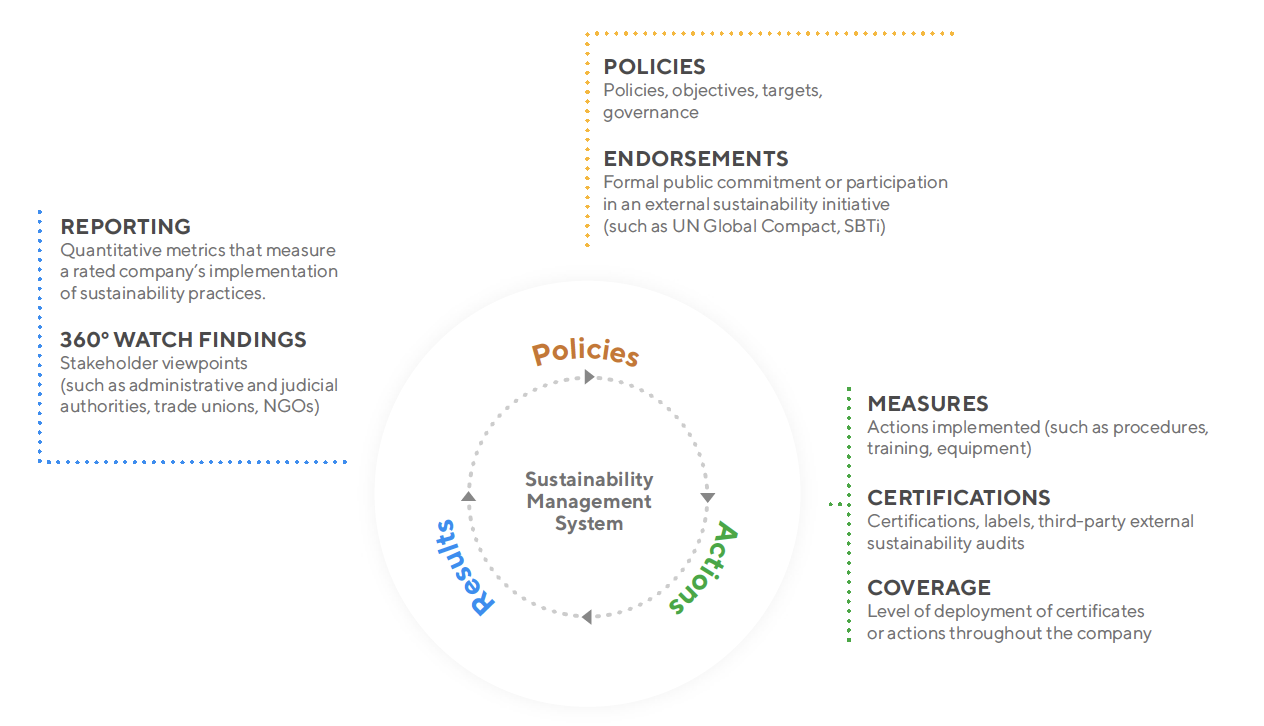
Each of these indicators contributes to the final score for the four key sustainability themes:
Environment
Labor & Human Rights
Ethics
Sustainable Procurement
The individual theme scores are weighted based on the company’s industry, size, and location, ensuring a fair and contextualized evaluation.
The Scoring Scale
Scores for each theme are calculated on a 0–100 scale, and rounded to the nearest ten. The scores are tiered into performance levels:
0–24: Insufficient
25–44: Partial
45–64: Good
65–84: Advanced
85–100: Outstanding
These tiers help companies understand how mature and effective their sustainability practices are compared to global peers.
How each indicator Is weighted
Each management indicator contributes differently to the overall theme score:
Policies: 20%
Endorsements: 5%
Measures: 24%
Certifications: 16%
Coverage: (Multiplicative factor, not additive)
Reporting: 14%
360° Watch Findings: 21%
For instance, if a company performs poorly in Reporting or has negative stakeholder feedback captured in the 360° Watch, it could significantly impact the overall score
The Role of 360° Watch
EcoVadis integrates external data through its 360° Watch feature, scanning more than 100,000 sources (NGOs, media, government databases) to capture both positive and negative stakeholder input. Some examples of considered databases include;
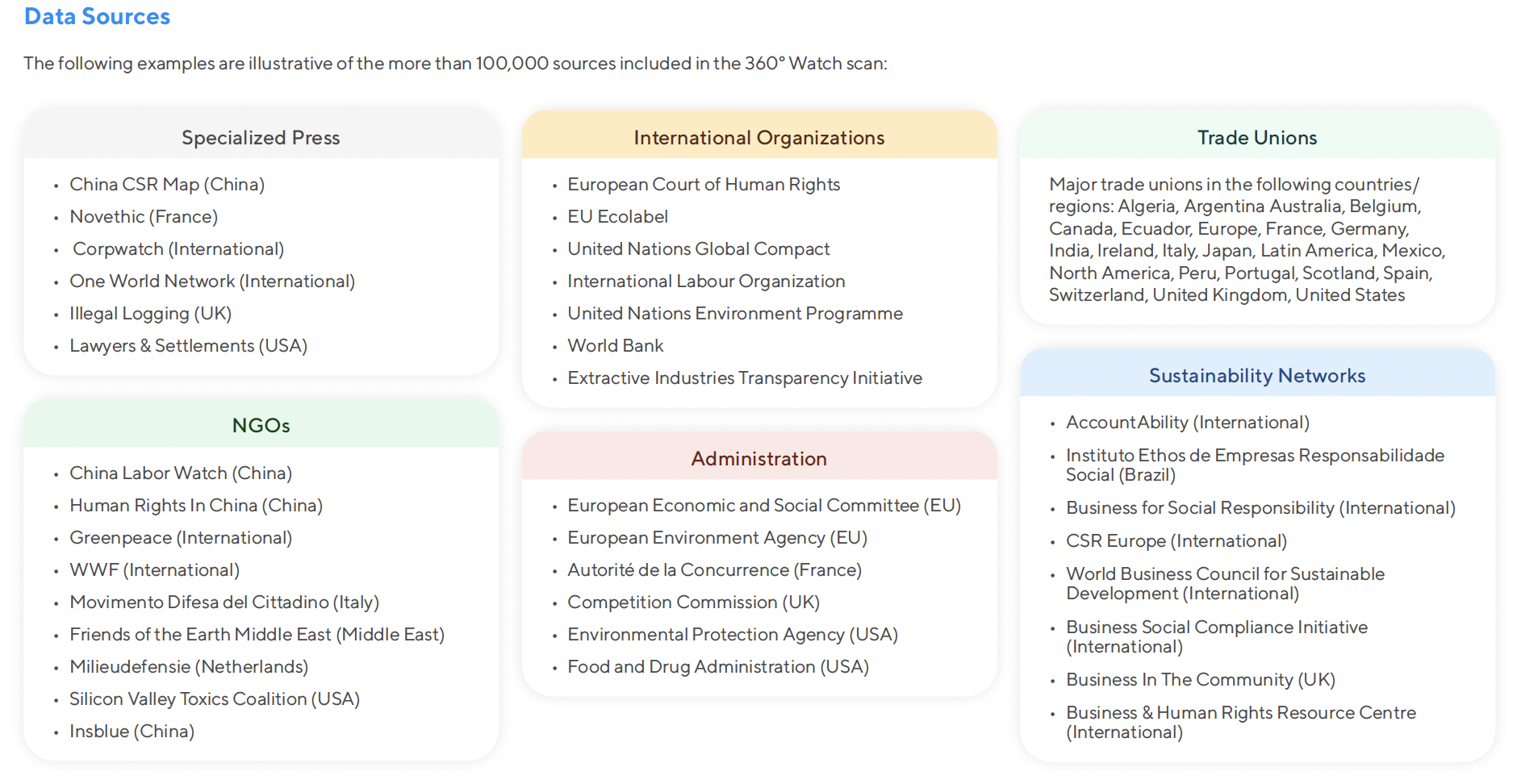
Negative findings may reduce the score, while verified positive actions can enhance it. This ensures that the score reflects not only what companies report but also how they are perceived externally.
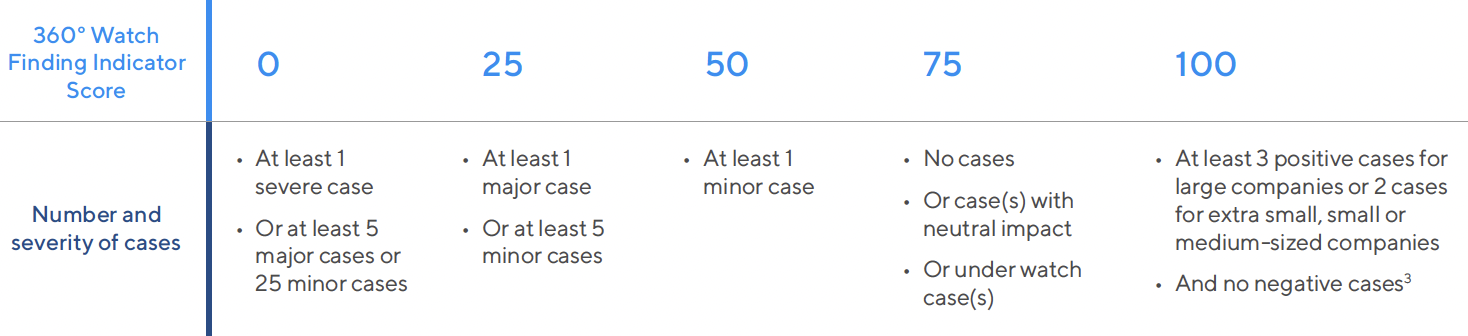
If 360° Watch Findings are likely to significantly impact a company’s score—such as a severe case or multiple major issues—EcoVadis offers a comment period before finalizing the scorecard. This gives the company a chance to provide context, documentation, or corrective actions, helping analysts refine the final assessment. You can find more details on the ecovadis 360° watch here.
Conclusion
The EcoVadis score is the result of a detailed, evidence-based assessment that weighs various indicators under a structured framework. It reflects not just intentions, but action and performance, ensuring that sustainability claims are backed by tangible proof.
The score’s transparency, grounded in international standards and data diversification, empowers companies to drive continuous improvement and build credibility with their stakeholders.