What are the IUCN Red List and CITES List?
Last updated: October 17, 2025
What is the IUCN Red List?
The IUCN (International Union for Conservation of Nature) Red List is the world’s main scientific reference for how threatened different species are.
It classifies species into categories like:
Least Concern (LC): No immediate risk
Near Threatened (NT): Future risk
Vulnerable (VU): Facing a high risk
Endangered (EN): Facing a very high risk
Critically Endangered (CR): Facing an extremely high risk
Extinct in the Wild (EW) / Extinct (EX): No surviving populations
Why does it matter for EUDR compliance?
The IUCN Red List does not set legal rules, it is a scientific tool. However, if a species you produce, source, or rely on appears in a threatened category, it signals heightened biodiversity risk in your EUDR due diligence assessment.
If a species you use appears on the IUCN Red List, it’s a sign to tighten your due diligence.
Example:
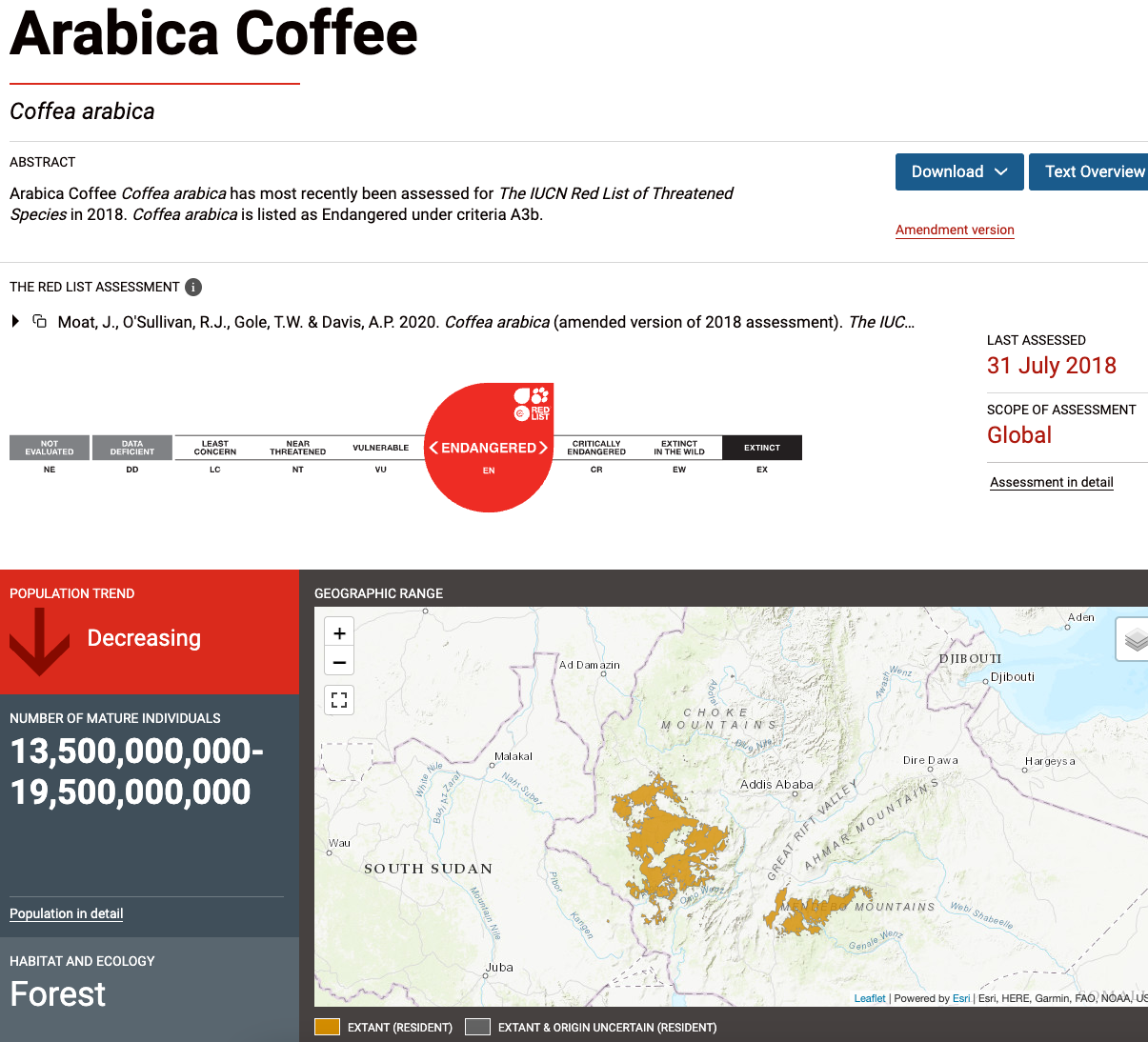
Wild populations of Coffea arabica are classified as Endangered because their natural habitats are shrinking due to deforestation and climate change.
For EUDR due diligence, this signals that Coffea arabica production in regions where wild Arabica still occurs may overlap with high-biodiversity or sensitive forest areas.
Operators should ensure traceability to verify that coffee cultivation did not replace or degrade natural forest ecosystems, and should document these checks in their risk assessment.
Examples of species in the IUCN list per commodity:
Commodity | Example Species | IUCN Status | Note |
Cattle | Bos javanicus (Banteng, wild cattle) | Endangered | Wild cattle species in SE Asia, threatened by habitat loss & hunting. |
Cocoa | Psittacus erithacus (African grey parrot) | Endangered | Commonly overlaps with cocoa agroforests in West/Central Africa. |
Coffee | Coffea arabica (wild populations) | Endangered | Threatened by deforestation & climate change. |
Oil Palm | Pongo pygmaeus (Bornean orangutan) | Critically Endangered | Habitat loss from palm oil expansion. |
Soya | Panthera onca (Jaguar) | Near Threatened (previously Endangered regionally) | Soy expansion in Latin America is a key driver of habitat loss. |
Rubber | Rhinopithecus avunculus (Tonkin snub-nosed monkey) | Critically Endangered | Threatened by land conversion incl. rubber plantations. |
Wood | Swietenia macrophylla (Bigleaf mahogany) | Vulnerable | Classic example of overexploited tropical timber. |
What is the CITES List?
The CITES List is a binding international agreement regulating cross-border trade of endangered plants and animals.
Species are listed in three Appendices:
Appendix I | No commercial trade allowed |
Appendix II | Trade allowed with permits, ensuring it is legal and sustainable |
Appendix III | Nationally protected species, where international assistance is in place to ensure proper control |
Searching in the CITES database also indicates a column for 'ALL LOCATIONS', indicating the locations where the trade of your species is prohibited (Appendix I), allowed with permits (Appendix II), or nationally protected (Appendix III).
Why does it matter for EUDR compliance?
If you handle or trade CITES-listed species , you’ll need valid CITES permits as part of your compliance documentation.
Species listed in Appendix I or II are already recognized as threatened or at risk, which means they also signal higher potential for environmental damage or biodiversity loss. This adds an extra layer of risk consideration in your EUDR due diligence, beyond the practical need for CITES paperwork.
For other EUDR commodities, such as coffee, cocoa, cattle, soy, rubber, or oil palm, CITES doesn’t currently apply. However, being aware of these listings helps identify where biodiversity risks may be higher.
Example
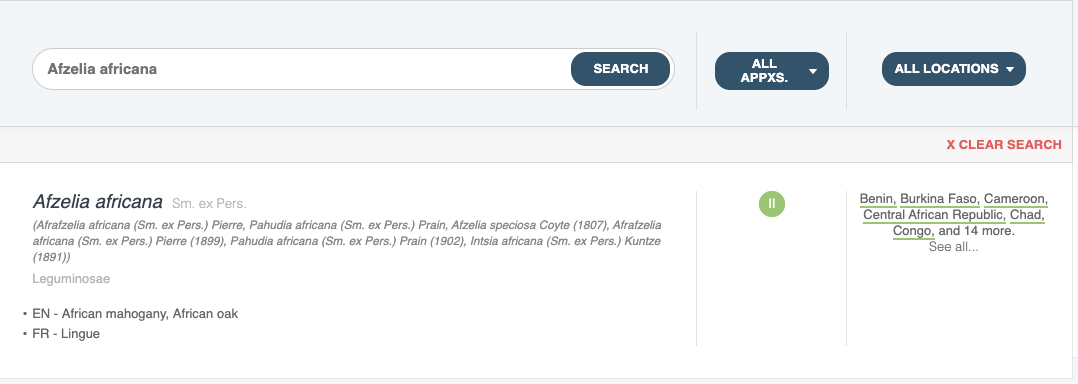
If you are exporting Afzelia africana from Benin (listed country under the 'ALL LOCATIONS' tab), you must obtain a CITES export permit issued by Benin’s CITES authority before shipment, this confirms the wood was legally harvested and trade won’t harm the species.
If you are exporting Afzelia africana from a country not shown in the CITES country list, that country cannot legally issue CITES permits for the species. In that case, the trade would not be compliant with CITES and would also fail EUDR due diligence, as legality cannot be demonstrated.
Summary
Checking your materials against the IUCN and CITES lists helps you meet EUDR due diligence obligations under Article 9 of the regulation. Article 9 requires companies to check that they follow national laws, including rules that protect endangered species. This means you need to know if you trade or source any species listed as protected or at risk.
Also, trading threatened or endangered species can lead to deforestation and harm ecosystems, which raises your environmental and compliance risks. By checking the IUCN and CITES lists, you show that you’ve considered these risks and that your products come from legal and sustainable sources.